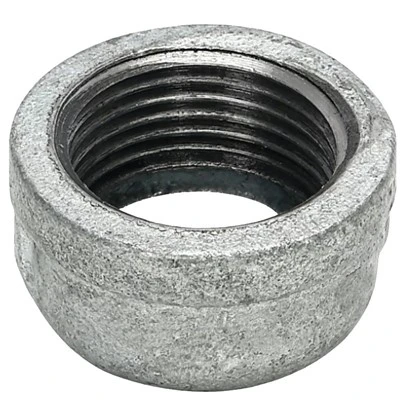
Hey there, friends! As a supplier of Threaded Reducing Bushings, I often get asked a burning question: "Can I use a threaded reducing bushing in an oil and gas pipeline?" Well, let's dive into this topic and find out.
First off, let's talk about what a threaded reducing bushing is. It's a type of fitting that allows you to connect pipes of different sizes. It has threads on both ends, with one end having a larger diameter and the other a smaller one. This makes it super useful for adapting pipes in a system where various sizes are needed.
Now, when it comes to oil and gas pipelines, there are tons of factors to consider before deciding if a threaded reducing bushing is a good fit. One of the most important things is the pressure rating. Oil and gas pipelines often operate under high pressures. The threaded reducing bushing you choose must be able to withstand these pressures without leaking or failing.
Another crucial aspect is the compatibility with the fluid. Oil and gas can be corrosive, especially if they contain certain chemicals or are transported at high temperatures. So, the material of the bushing needs to be resistant to corrosion. For example, stainless - steel or galvanized steel bushings are often good choices because they can hold up well against the harsh environment inside the pipeline.
Let's also look at the installation requirements. Threaded connections need to be made properly to prevent leaks. In an oil and gas pipeline, a leak can be a huge problem, not only because it can lead to loss of product but also because it can pose a safety hazard. You have to ensure that the threads are clean, free of debris, and the right thread compound or sealant is used.
Alright, let's mention some related products we offer. If you're also in the market for other pipe fittings, we've got you covered. We have the Galvanized Male Reducing Nipple, which is useful for making connections between pipes of different sizes. And the Galvanized Malleable Reducing Tee is great when you need to split a pipeline or combine flows from different sources where the pipe sizes vary.
The Galvanized Malleable Equal Tee is handy for situations where the pipe sizes are the same at all three ends. Then there's the Fully Threaded Nipple, which can be used for extending pipelines or making connections. And don't forget the Galvanized 90 Degree Female Elbow for changing the direction of the pipeline.
Back to the threaded reducing bushings in oil and gas pipelines. There are some standards and regulations that you need to follow. In the oil and gas industry, there are strict codes such as those from the American Petroleum Institute (API) and the American Society of Mechanical Engineers (ASME). These codes specify the requirements for materials, manufacturing, and testing of pipe fittings. So, when you're considering using a threaded reducing bushing, make sure it meets these standards.


In some cases, the nature of the oil or gas being transported can also influence the choice of a threaded reducing bushing. For instance, if the fluid is high - viscosity oil, the bushing needs to be designed in a way that it doesn't cause too much of a pressure drop or blockage. Similarly, if the gas has a high sulfur content, it can be even more corrosive, and the bushing material needs to be carefully selected.
Let's talk about the maintenance aspect. Once the threaded reducing bushing is installed in the pipeline, it needs to be regularly inspected. You have to check for signs of wear, corrosion, or any loose connections. Any issues found early can be fixed before they turn into major problems.
If you've ever worked on an oil or gas pipeline project, you know that safety is the number one priority. A faulty threaded reducing bushing can lead to leaks, spills, or even explosions in extreme cases. So, it's not just about getting the job done; it's about doing it right and keeping everyone safe.
Now, I'm sure you're thinking about the cost. Well, while you might be tempted to go for the cheapest option, remember that in the oil and gas industry, quality is key. A low - quality threaded reducing bushing might cost less upfront but can end up costing you a fortune in repairs and potential accidents in the long run.
So, to answer the question "Can I use a threaded reducing bushing in an oil and gas pipeline?", the answer is yes, but with careful consideration. You need to make sure the bushing meets the pressure and corrosion requirements, follows industry standards, and is installed and maintained properly.
If you're in the market for high - quality threaded reducing bushings or any of the other pipe fittings I mentioned, we're here to help. We've got a wide range of products that are made to meet the toughest industry standards. Whether you're working on a small - scale project or a large - scale oil and gas pipeline network, we can provide the right fittings for you. Just reach out for a procurement discussion, and we'll work together to find the best solutions for your needs.
References:
- American Petroleum Institute (API) standards
- American Society of Mechanical Engineers (ASME) codes